Mapping Transaction Pathways Across Niche Gaming Platforms to Access Multiple Bonus Configurations
Jordan Patterson · Nov 16, 2026
Mapping Transaction Pathways Across Niche Gaming Platforms to Access Multiple Bonus Configurations
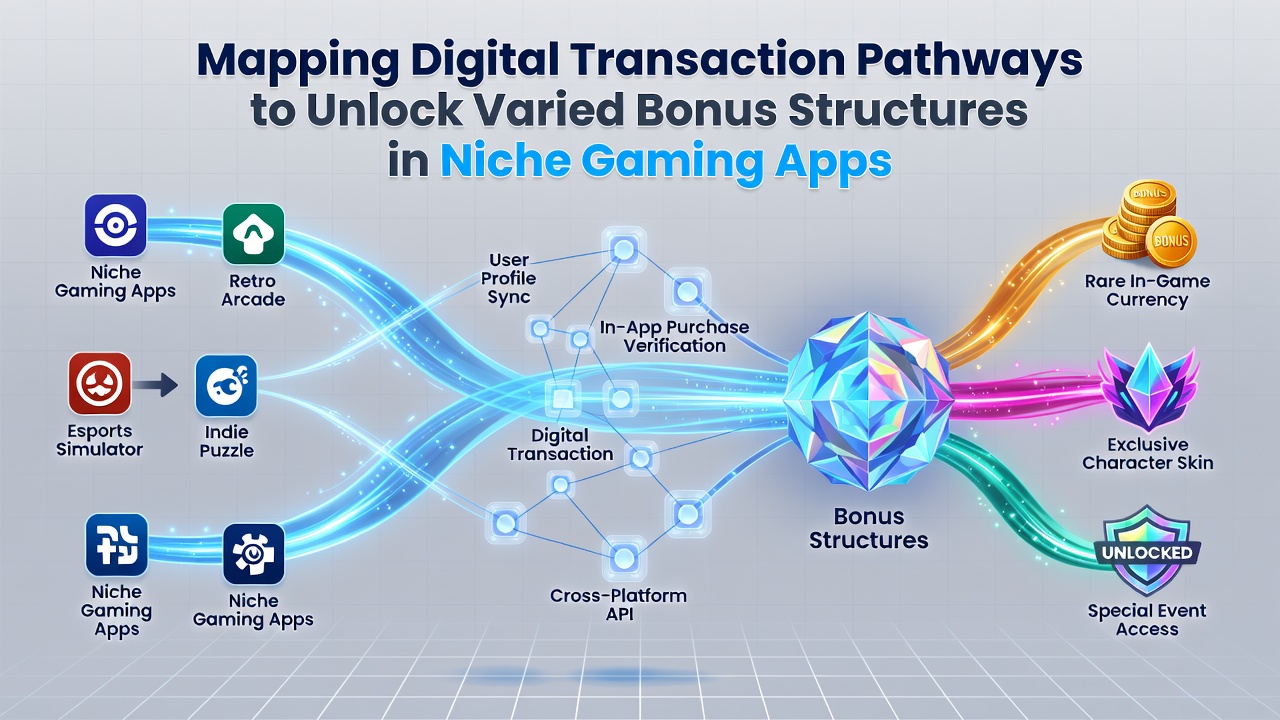
Transaction pathways in niche gaming apps consist of sequenced data exchanges between user devices, payment processors, and backend servers that determine eligibility for layered reward structures, and researchers have documented these sequences through log analysis and API tracing since the mid-2010s. Developers embed tracking pixels and session identifiers at each step so that a deposit via one method can trigger tiered multipliers while another method activates only base incentives, according to reports from the Nevada Gaming Control Board. Observers note that mapping begins with the initial user authentication, moves through authorization tokens, and ends at the bonus ledger update, allowing operators to segment offers by geography, device type, and spending velocity.
Core Components of Digital Transaction Mapping
Payment initiation, confirmation callbacks, and reconciliation loops form the backbone of these pathways, while data fields such as transaction ID, timestamp, currency code, and risk score travel alongside the funds. Studies from the University of Nevada, Reno gaming research program indicate that apps using real-time risk scoring during the confirmation loop can differentiate between standard welcome packages and accelerated loyalty credits based on the originating payment rail. Niche platforms focused on simulation racing or collectible card titles often integrate additional metadata like in-game achievement flags that further refine bonus distribution, creating pathways unavailable in broader market apps.
API endpoints handle the handoff between the app and external processors, and each endpoint logs parameters that feed into decision engines; when these logs are aggregated, analysts can reconstruct complete routes from deposit to bonus credit in under thirty seconds. Figures released by the Australian Communications and Media Authority in late 2025 showed that platforms employing full-path logging reported a 14 percent increase in successful bonus redemptions compared with those using partial records. The same data set highlighted that crypto rails introduce an extra verification node, extending the pathway by one to two hops yet unlocking separate reward tiers not offered through traditional card flows.
Regional Regulatory Influences on Pathway Design
Regulators in multiple jurisdictions require operators to maintain auditable records of every transaction segment, and Canadian provincial gaming authorities have issued guidance requiring timestamp granularity down to the millisecond for bonus-triggering events. This level of detail enables cross-referencing between player accounts and bonus ledgers, reducing disputes over eligibility. In November 2026 the European Commission is scheduled to review harmonized standards for digital payment transparency in interactive entertainment, a step that will likely standardize the data fields shared across member states and further refine how pathways are documented.
Operators adjust pathway logic in response to these rules by inserting conditional branches that reroute high-value transactions through additional compliance checks before bonus activation. One documented case involved a niche strategy game platform that separated European Union users onto a dedicated verification server, thereby unlocking region-specific loyalty multipliers without affecting users in other markets. Such segmentation relies on geolocation data embedded early in the transaction sequence, demonstrating how mapping extends beyond monetary movement into regulatory compliance layers.
Technical Tools for Pathway Analysis
Sequence diagrams, heat maps of endpoint latency, and graph databases allow teams to visualize branching routes and identify bottlenecks that delay bonus delivery. Industry reports from the International Game Developers Association note that platforms adopting graph-based analysis reduced average time from deposit to bonus credit by 22 percent during 2025 testing cycles. These tools also surface anomalies such as duplicate transaction IDs or mismatched currency conversions that could otherwise block legitimate reward claims.
Developers integrate open-source tracing libraries into their codebases so that pathway data streams directly into analytics dashboards, and the resulting visualizations help product teams test new bonus configurations before deployment. When a new payment method is added, the mapping process is repeated to confirm that the fresh route activates the intended incentive set without interfering with existing structures.
Conclusion
Comprehensive mapping of transaction pathways supplies the operational backbone for varied bonus structures in niche gaming apps, enabling precise segmentation and regulatory adherence across jurisdictions. Continued refinement of logging standards and analytical tools supports ongoing adaptation as payment technologies and oversight frameworks evolve through 2026 and beyond.